- Time on the roof
- 2 – 4 days once the scaffold is up
- Guide price
- £1,800 – £3,500 for a two-storey house, scaffold included
- Planning permission
- Not usually, but check if listed, in a conservation area or under an Article 4 direction
- Building Control
- Not usually for the stack alone; yes once work reaches the loft stack or breasts
- Neighbours
- A party wall notice if the stack is shared
- Disruption
- Scaffold outside and access to the loft; rooms below are not opened up
How a chimney stack is taken down
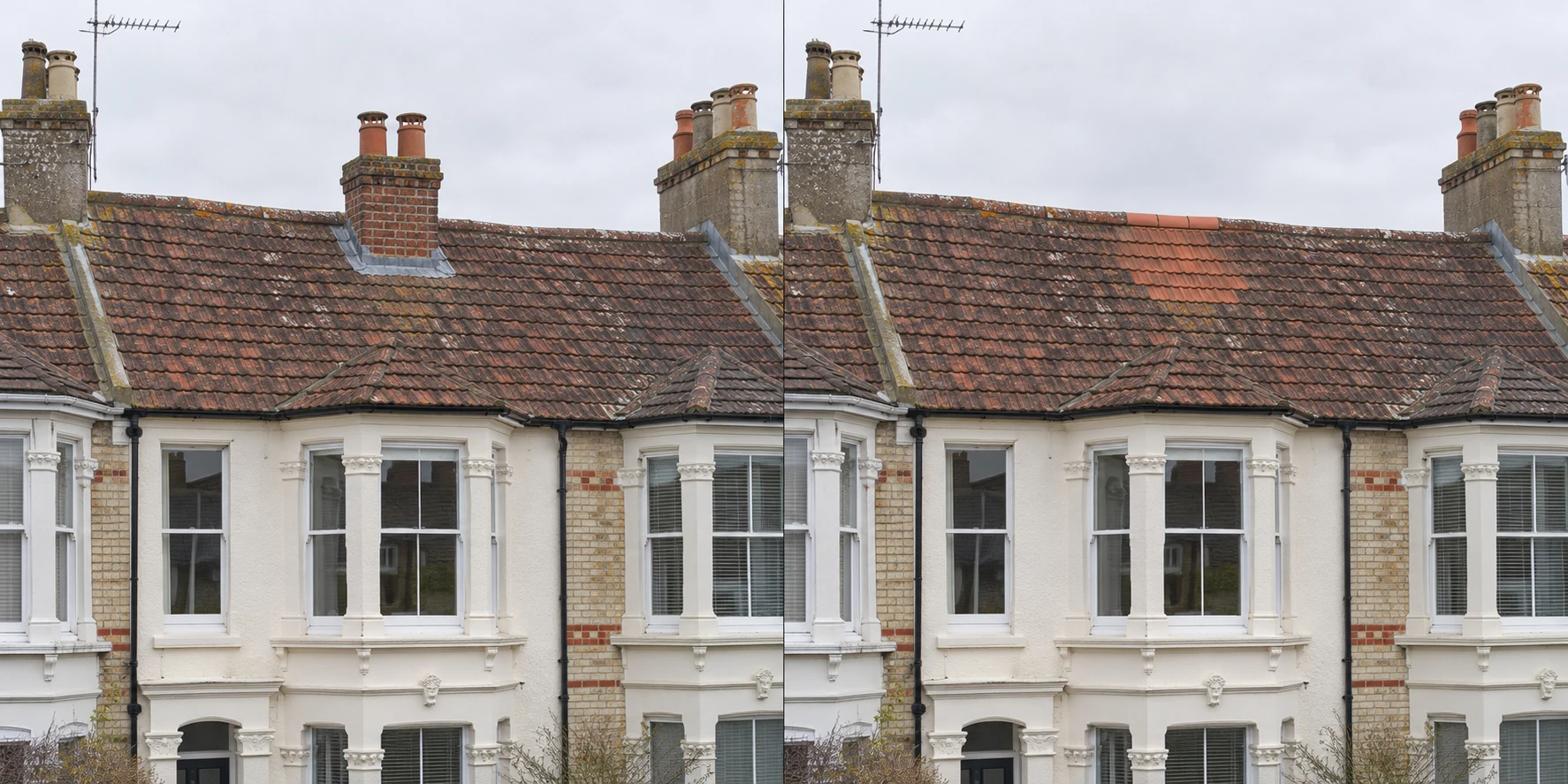
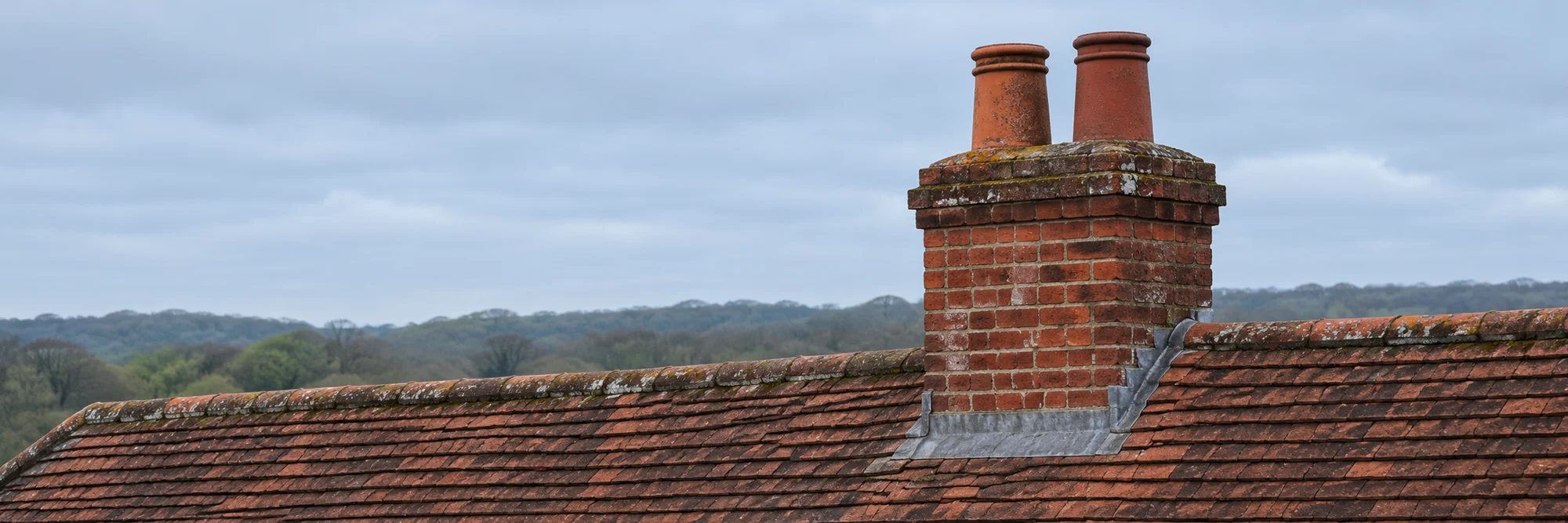
A stack is dismantled by hand, a course of bricks at a time, from a scaffold built around it. The masonry comes down to just below the rafters, the flues are capped and vented, and the roof is rebuilt across the gap.
Check what the flues serve
We confirm from the loft and the rooms below which flues are live. A gas fire, boiler flue, stove or a neighbour's fire in a shared stack changes the job.
Scaffold
A chimney scaffold goes up with a working platform at roof level. Scaffold on a pavement needs a highway licence first.
Strip around the stack
Pots, flaunching, aerial brackets and lead flashings come off. Slates or tiles around the stack are lifted and kept for reuse where sound.
Dismantle by hand
Bricks are lifted off course by course and lowered in bags or down a chute. The flues are plugged below the working level so soot and rubble stay out of the rooms.
Cap and vent the flues
Below the roofline, each flue gets a vented cap so it stays dry but can breathe. Vents go in at the bottom of the breasts if they are not already there.
Trim in and roof over
New timbers are trimmed in between the rafters, then breathable membrane, new battens and slates or tiles to match the slope.
Clear and strike
Rubble leaves site, gutters are cleared and the scaffold comes down once the roof is checked.
When removing the stack is the right choice
Removal makes sense when no fire, stove or boiler uses the chimney, none is planned, and the stack is about to need money spent on it. Think again if you rely on a live flue, the house is listed or in a conservation area, or your neighbour still uses their half of a shared stack. Our repair or remove guide works through the symptoms and long-term cost.
Gas fires, boilers and live flues
A flue serving a working gas appliance cannot simply be capped. A Gas Safe registered engineer must disconnect the appliance and cap the supply first, or the appliance must be re-flued another way. The stack only comes down once every flue in it is out of use.
Ahead of solar panels, a loft conversion or a re-roof
A stack on a south-facing slope breaks up and shades a solar array. In a loft conversion it takes headroom and floor area. When re-roofing, remove it while the scaffold is already up, so one set of access covers both jobs.
What happens to the flues and breasts below
The chimney breasts below stay in place and carry their own weight to the foundations as before. But the flues no longer vent through the roof, so they must be capped and ventilated or they collect moisture.
Skipping the venting is the most common way a stack removal goes wrong. Damp air in a sealed flue condenses on cold masonry and salts in old soot draw in more, leaving brown staining and damp patches on the breast walls months later. A vented cap at the top and an airbrick at the bottom lets each flue dry out.
If you later want the breasts out too, any masonry left above needs steel or engineered support, covered in chimney breast removal.
Shared stacks on terraces and semis
On most Brighton terraces and many semis, one stack straddles the party wall with flues from both houses. You can usually take down your half with a party wall notice and your neighbour's agreement, provided their flues stay complete and still vent. You cannot leave their flue ending in your loft or leave an unstable half-stack. Often both owners remove the whole stack and share one scaffold.
Do you need permission to remove a chimney stack?
Usually not, for a house that is not listed and is outside a conservation area; in a conservation area the Planning Portal advises asking the council first. Listed buildings need listed building consent. Removing the stack above the roof may not need Building Regulations approval; work to the stack in the loft or the breasts does.
Party wall notices and South Downs National Park rules for Lewes are covered in our chimney removal regulations guide. Pavement scaffold licences come from Brighton & Hove City Council in the city, and East Sussex County Council (East Sussex Highways) elsewhere in the county, including Lewes, Peacehaven, Newhaven and Seaford.
How much chimney stack removal costs
Guide prices run from about £1,200 to £2,000 for a bungalow, £1,800 to £3,500 for a typical two-storey house and £3,000 to £6,000 for a tall terrace or large shared stack, scaffold and roofing included. Brighton and the South East usually sit in the upper half. The stack removal cost guide has worked examples and a quote checklist.
How long it takes and what weather means
Most single stacks take two to four days on the roof, plus scaffold time either side; a large shared stack on a three-storey terrace can take a week. Strong wind stops work at height and steady rain stops roofing.
Sussex considerations: salt, wind and matching the roof
On the seafront and the cliff tops at Peacehaven, Newhaven and Seaford, salt and wind-driven rain keep the windward face of a stack wet for long spells. In cement mortar that can cause sulphate attack, which swells the joints on one side and tips the stack away from the weather.
Older Brighton terraces may be partly bungaroosh, a lime, flint and rubble mix that is hard to fix into, which matters if part of a stack is kept on brackets.
Why new tiles look different at first
Victorian and Edwardian roofs are commonly natural slate, interwar houses clay plain tile, and later bungalows concrete interlocking tile. We reuse sound slates or tiles from around the stack and add matching reclaimed or new ones. New tiles start brighter than a weathered roof and tone down over a few years. Some concrete profiles are no longer made, so reclaimed is the only close match.
Sources and further reading
- Planning Portal: do I need permission to remove a chimney stack in a conservation area
- Planning Portal: do I need permission to remove chimney breasts
- legislation.gov.uk: GPDO 2015 Schedule 2 Part 1 Class G (chimneys, flues etc.)
- Brighton & Hove City Council: Article 4 direction, The Avenues
- Brighton & Hove City Council: Article 4 directions
- Brighton & Hove City Council: highway licensing for skips, scaffolds and hoardings
- East Sussex County Council: obstructions on the highway policy (PS 8/3)
- West Sussex County Council: scaffolding licence
- gov.uk: party walls and building work
- Richmond Council: chimney stack removal and the Building Regulations
- Thurrock Council: chimney stack removal
- Department for Communities NI: domestic chimneys and flues (capping and ventilating unused flues)
- Homebuilding & Renovating: restoring chimneys (leaning stacks, sulphate attack)
- Designing Buildings Wiki: bungaroosh